Sunday, February 27, 2011

Anglin's Wedding Photography in Bend Oregon


sport photography kit (unpacked) by tychay


Photo Credit: celtics baby clothes


Anglin’s Wedding Photography will preserve your wedding memories with their exceptional and incomparable talents. Jake and Shereen Anglin can create beauty on film that will last a lifetime! Together, they capture the sentiment of a couple’s once in a lifetime event, their wedding day. Anglin’s portraits are incredibly intimate and share a level unlike any other wedding photographers endeavors.

The level of intimacy captured and preserved on film between the bride and groom is unsurpassed and enduring. While viewing Anglin’s sample portraits from their website www.Anglins.com, you can almost feel the emotional and intimate nature of the wedding with the soft focus and moody lighting the Anglins use. For any couple, their wedding day can be the most anxious and exciting day of their lifetime together. Photographs of this moment should be intimate not only with the wedding party but should include seemingly simple fundamentals of the wedding such as the environment, the décor and guests.
No two weddings are identical because no two people are identical. Each wedding is as unique as you and the Anglin’s expose the individuality and style of your wedding portraits. On the website, a happy couple by the water is holding up a big Thank You sign; they really appreciate your business! The Anglin’s not only take the traditional wedding shots but they also create portraits with natural body movements with natural expressions that are difficult to do in posed portraits.

Their portraits are very detail oriented with great elemental compositions. Their photographs not only portray close-ups among the bride and groom, but they also capture the smallest minutiae of the wedding and their sample portraits show an assortment of close-ups of the wedding jewelry worn or the candles lit beside a wedding cake. Another precise photograph is of white chairs and the bride’s bouquet and in yet another, the bridal bouquet on the table with lit candles only further giving an artistic element captured on film. These are small moments the bride has dreamed about her whole life. Even when the lighting seems low they capture a well lit environment that exposes the low light elements and details with clarity. Their wedding portraits carry artistic appeal. Precise close-us of a wedding cake so detailed you can actually see the very crumbs and it is elegant and beautifully done. Their special effects portraits are luminous, vibrant and brilliant with pure clarity.

Anglin’s Photography is operated by the owners, Jake and Shereen Anglin and they are truly a wonderful dynamic team. They formulate a great portraiture plan to make the wedding day a very treasured and memorable event. In addition, the Anglin’s are great to work with and they have fantastic idea’s that can be incorporated individually for uniqueness in the photographs. They are a very charming and loveable pair with vibrant personalities that make you feel very relaxed, comfortable and welcomed even when the heat of the wedding day turns on. These photographers have an artistic flare not only capturing a moment in time on film for the newlyweds but they add artistic beauty and value to the portraiture package. Anglin’s Photography offers a wide range of pricing and package arrangements with both color and black and white portrait’s. They also do engagement portraiture and this could be an added bonus for the busy bride and groom. Anglin’s Photography in Bend Oregon is precise and experienced. Please visit their website at WWW.anglins.com for further information.


The Budget Bride's Guide to Saving Hundreds on Photography


Cuba Gallery: California / Los Angeles / city / Santa Monica / color / blue / circus / ferris wheel / amazing / sky / summer / background / clouds / fun / photography by ►CubaGallery


photo source


If you are planning a wedding, you already know how much things can add up. From invitations, venues, catering, decorations, and so on, you can quickly spend thousands of dollars on your wedding day, without even realizing where all of it went. In fact, according to theknot.com, the average wedding cost is $27,800 per couple! Think of how that money could have come in handy in case of an emergency, in putting down a down payment on a new home, or in financing a fantastic honeymoon! However, if you take control of your budget now, you can have a memorable, elegant wedding while saving thousands for your happily ever after years.

The first thing you need to do when you are planning a wedding is to decide on how much you can reasonably afford and then discuss which items are the most important to you. Many couples decide that photography is at the top of their list. Follow the tips below to have memorable pictures, while staying on budget:
Shop around for photographers

The first step in saving money in general is to find out who offers the service and how much they charge. Never accept the first offer that you receive. Call various photographers and ask them what they charge and what their service includes. Be sure to consider how much the entire cost of photography will be. For example, a photographer who charges less per hour who charges more per each picture may not be a good deal. Search through your phone book and go online to see photographer's blogs and samples of their pictures.

Think outside the (office)box

Although there are plenty of photographers who specialize in photography and have a career in photography, there are also many skilled photographers who have different day jobs, pursue photographer as an interest, or specialize in other forms of photography. Check around for people such as these who have experience in photographing weddings, but who do not depend on it for their bread and butter. Think about anyone you know who fits this criterion: someone who takes pictures for the local newspaper, a sports photographer, a friend who has taken a few photography courses, etc. They will often charge much less than photographers who make their living from inflated wedding packages. Typically anything associated with weddings is more expensive than something without the wedding association. So try to find a photographer that has similar experience with a much smaller price tag.

Get digital prints

Ask your photographer if he can photograph you with a digital camera. Any type of special effect like using sepia pictures, black and white pictures, red eye removal, coloring in certain elements like the flowers while leaving the rest of the picture muted, and so on can be completed by just a few buttons. So you won't have an effects expense passed on to you. Also, ask your photographer if he can give you the digital prints on a cd or memory card. If he does this, you will need to be sure that he has signed over the rights of ownership to you so that you can develop the pictures yourself. This step could save you hundreds, maybe even thousands, and you will only be paying for his hourly rate and the ownership rights, rather than a certain dollar amount * the amount of each picture.

Consider limiting the photographer's time

Consider the actual amount of time that you want to have the photographer around. Keep in mind that many photographers will also charge you for the time it takes to travel and set up for the pictures. Some brides want the photographer to take pictures while they are preparing for the wedding, but if you are not interested in these types of pictures, don't ask the photographer to be around during that hour. Consider having your photographer take your pictures during the important parts of the ceremony and formal posed pictures after the wedding. Then just have him stay for the first hour of the ceremony, rather than the entire event. You can still get in many of the important photos during this time, such as the first dance, the receiving line, and the cake tasting. But you can save hundreds of dollars if you do not keep the photographer around for the next 1-3 hours of the reception. And with many photographers charging hundreds of dollars an hour, this is easy money that you can pocket for your future.

Opt out of the reception

Consider not having your photographer take reception pictures at all. This will save time on moving between venues, set up, and hours off of his rate. Many brides today are opting for more photojournalistic pictures, rather than posed pics. Place a couple of disposable cameras on each guest table and ask for their help in taking pics at the reception. Be sure to leave a convenient basket for them to drop the cameras off at before they leave. For the cost of a few $5 cameras, you will wind up with hundreds of pictures to choose from without the hefty photographer's fee.

Compare packages

When deciding on a package, be sure that you are comparing what each photographer is offering you. Sometimes you will save money by going for a package deal, sometimes you may be better off deciding on a certain number of pictures, rather than a package. So carefully scrutinize the charges for each package. Also be leery of unnecessary charges: a $100 wedding photo album is not worth it when you can go to your local supermarket and buy one for $10. According to Elizabeth and Alex Lluch in Planning the Most Memorable Wedding On Any Budget, you can also save big if you place the pictures in the wedding album yourself. It might take a little time, but make a day of it with your new spouse to look back at your happy memories.

Skip the engagement photos

Although it might be nice to have pretty picture to send with your invitations or to the local newspaper for your engagement announcement, you can use alternative methods, rather than pay the hefty studio and professional photography fee. For example, if you already have existing formal photos of you and your fiancé, use those instead of opting for a multiple hundred dollar studio session. Alternatively, ask a friend with photography experience to set up a muted background or go to a natural setting and have her photograph you and your fiancé for your engagement photos. Finally, check a local family photography studio, such as Wal-mart, Sears, or JC Penny. They will have appropriate backgrounds, but charge much less than a wedding photographer.

Barter, barter, barter

If you have met with several photographers and you liked one more than the others, but he was a little too expensive, let him know that you received a better offer and see if he comes down on the price. Also, before you commit, be sure that you ask "Is this the best deal you can give me?" for even more wiggle room. In this economic time, more and more people are learning powerful negotiating skills and businesses are suffering from unprecedented losses. See how flexible your photographer will be with the price. If you can't quite get the deal you want, go with another photographer or see if your first choice can throw in a freebie, such as a free parent's album, rather than a reduction in price.

Barter some more

If you have any type of service that you complete, see if you can exchange your service for the photography or a portion of his fees. Also, if you blog or you are involved in advertising or website development, see if you can get a discount if you provide free advertising for the photographer after your event. This type of service exchange can be posted in a local newspaper ad or on craigslist.com. Alternatively, if you have a friend or relative getting married, see if your photographer will give you a discount for a positive recommendation and referral.

Consider a student photographer

Yes, it might be scary to put the future of your only wedding pictures in a non-expert's hands, but you can save big by asking a student photographer to capture your wedding day. Additionally, students are more likely to give you digital prints (see above) in exchange for them gaining experience and increasing their portfolio contents. Be sure that they have some previous experience and make sure you look at their previous work. Also, be sure that your expectations are clearly stated and make sure that they can be depended on and that they are punctual.

Regardless of which photographer you go with, be sure that you get recommendations for him, check his portfolio, and make sure that you both know what you will be getting. Be certain that any adjustments are in writing, especially if the photographer has reduced the price. Then rest assured that you have done your best to get the pictures you want, and the peace of mind you need as you begin your new life with cash in your pockets.

Saturday, February 26, 2011

Photography Tips and Tricks


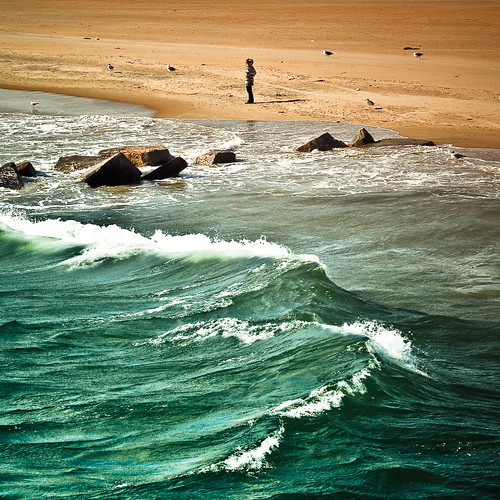
Cuba Gallery: Wave / beach / ocean / sea / green / nature / people / Coney Island / New York / photography by ►CubaGallery


source,credit


Photography isn't just about making memories, it's about art. Be artistic. Here are a few tips and tricks to help you make those photos, picture perfect.

To make those dull photos turn into works of art, consider these questions:
Decide if you want the full subject, half, or even a close up. How much background do you want, or even foreground? Exactly how close do you want that close up? What details do you want to focus on? Do you want a vertical, horizontal, or tilted photograph? What angle do you want? What's the best lighting? What background do you want to use?

1. Placing the subject of interest. Choose how much of the subject you want photographed. (Example: you want full body, half body, or face shot.) If your subject fills the frame then it's okay to center it. If you are trying to get more of the background, try placing your subject to the right or left in the viewfinder. With a horizontal (laying down), try to place them at the top for more foreground, or at the bottom for more background. And you could even tilt the camera for a more funky picture. It all depends on what part of the scenery you want visible in the picture. Maybe you want that tree to your left and your subject to the right. Or the patch of flowers in front and the mountains in back. (I find it best to take my time and take shots of each possible way and several different poses. This way I know I'll find the best photograph with the most potential.)

2. Don't center. The circle, plus sign, or brackets in the middle of your viewfinder is for focusing and isn't necessarily for centering the subject. Placing your subject in t he circle could leave you with a lot of empty and useless space on your photograph. Too much background and not enough subject. If your subject fills the frame then it is okay to center them. (Sometimes you just have to ignore the focus points and concentrate on your subjects placement in the frame instead.)

3. Camera angles. Walk around the subject, shoot from all angles and sides. This will help you to get the best lighting, background, and different aspects of the subject. You will want to find the best angle for all three. Pick a background that will not distract your viewers from the subject of interest. (I choose my backgrounds to where there's not much clutter. Sometimes I will use a plain sheet or blanket and place it behind the subject, but making sure it does not clash or blend.)

4. Reflectors. In some situations you just can't get enough light or you perhaps you just want more. To use a light reflector, place it in a position where it reflects light onto the subject without it getting in the frame. Use this if your shot is coming out too dark or there are too many shadows. On night shots that you need more than your flash can put out, place a lamp (or several) near your subject, but out of sight, and use the light reflectors to bounce from the lamps to where needed. (Some homemade light reflectors can be real cheap to make. You could use white cardboard, or if you can't find this, then simply take any piece and paint it white. For more light, place tin foil over your piece of cardboard, smooth it out, and reflect where needed.)

5. Shading. Using the same piece of cardboard as mentioned above, you can use this to block the light as well. You could make this easier by painting one side white and the other black. Or just place the piece in front of the lamp or sun to dismiss light from your subject. On most cameras you can use a sunshade for the lens, some cameras come with this, some you buy separate. This won't keep light from your subject, but it will block the light from causing a flare effect on the outcome of your photograph. The sunshade just clicks into place around your lens, and keeps the lens safe from any glaring.

6. Outside daylight. Direct sunlight is when you place the sun behind the camera, but in front of the subject. Using direct sunlight can cause shadows on the subjects face and possibly their eyes squinting. Back light is when the sun is behind the subject and in front of the camera. This will lighten the photo and cause much softer features on the subject.

7. Preventing red eye. Red eye is caused when the flash is too close to the lens. Ways to prevent this are: Attach a larger flash to your camera, t his way the flash is further from the lens. Or if buying a camera, look for one with the flash located far from the lens. Try getting closer to your subject when needing the flash. (Before I bought my camera with built in red eye correction, I had to use a photo editing program to correct these problems. I was even scanning my pictures and still having to edit when I was using my film camera that was hopeless against red eye.)

A Look at Some Helpful Photography Websites With Beginner Photography Tips and Advice For Pros


night photography by richard brian. Shutteraddicts.com by RICHARD BRIAN


credit


When I was in high school I found my moms old Nikon camera. I always wanted to get into photography but didn't know anything about it. So I got a job at a photo lab and took that camera with me everywhere. I'd bring the film into work the next day to see what I had learned and how the photos turned out. When prom time came around a bunch of my friends wanted me to do their prom pictures. So I borrowed a nicer camera from a friend and charged my friends to shoot their prom pictures. I made enough money to buy my first camera. After that it was a start of a dream

Since then I have done paintball photography for a world wide magazine, been a sports photographer, wedding photographer, school photographer, child photographer, and every kind of photographer in between. These are a list of sites I used when I first started out that I found to be invaluable.


www.photographytips.com
Great site that is some what member based. You can look around most of the site for free but if you want to access everything there is to see you can sign up online for only $5.00 a month. There are great articles on subjects from composition, to light, to how to use your flash. There are also some great galleries so that you can learn by example. Every page is filled with helpful information and numerous pictures that help explain the topic of the article.

www.photosecrets.com
This site may not be graphicly pleasing but it covers its bases. The tips are divided up into beginner, intermediate, and advanced. The beginner section covers topics like what kind of camera and film you should buy as well as how to take better pictures of people. he intermediate section talks about quipment, hot to tackle more complicated subjects, and travel photography. The advanced section is more about selling photos, more details about film, and the use of filters. The only thing I Don't like is there are no photos on any of the pages. I think a photography site should have pictures!

www.kodak.com
As one would expect this site covers everything that is photography. This site is easily to scroll through and has a wide variety of topics. Learn the best way to photograph your baby, take better vacation pictures, or photograph your pet. The site also covers topics like printing pictures, sharing pictures, and getting started in digital. The photographs on the site are great and offer some step by step examples of topics discussed in the articles. There are also interactive demos on different subjects that are worth checking out. You can even research information on
film and digital cameras.

www.photonhead.com
This site offers a great tool for the photographer who wants a better understanding of shutter speeds and f-stops. This is the hardest concept to grasp when starting out=t in photography. I know, Ive been there. No matter how many times its explained you just Don't quite get it. This site offers a tool where you can set shutter speeds ad and f-stops in any combination and see what the effect would be. You have a sample photo to your left and to your right you can see what it would look like with your f-stop and shutter speed combo. This is a great tool that helps you learn about f-stops, shutter speed, focal length, and depth of field.

www.betterphoto.com
This site offers online photography course for the photographer who wants to become a professional. The online classes are rated for skill level of the photographer. Classes usually include weekly assignments and have the course instructor personally look over your work. Course range from the business of photography to how to use photoshop and many other topics. Classes vary in price. A 8week class could be between $200-$400. If your aren't happy with your course by the third assignment there is a money back guarantee.

www.scphoto.com
This is one of the best sites I can recommend for young photographers who need direction. This site was created by a high school photography teacher. Its is a free lesson plan that offers homework for photographer. The best thing it offers is assignments on different areas of photography. There are assignments for learning magazine photography,lighting, concepts, and much much more. There are list of words and terminology you should new. Its basically a free high school photography class. I went through the whole lesson plan when I was teaching my self photography and highly recommend it.

Photosecrets.com


Photographytips.com


Kodak.com


Photonhead.com


Betterphoto.com